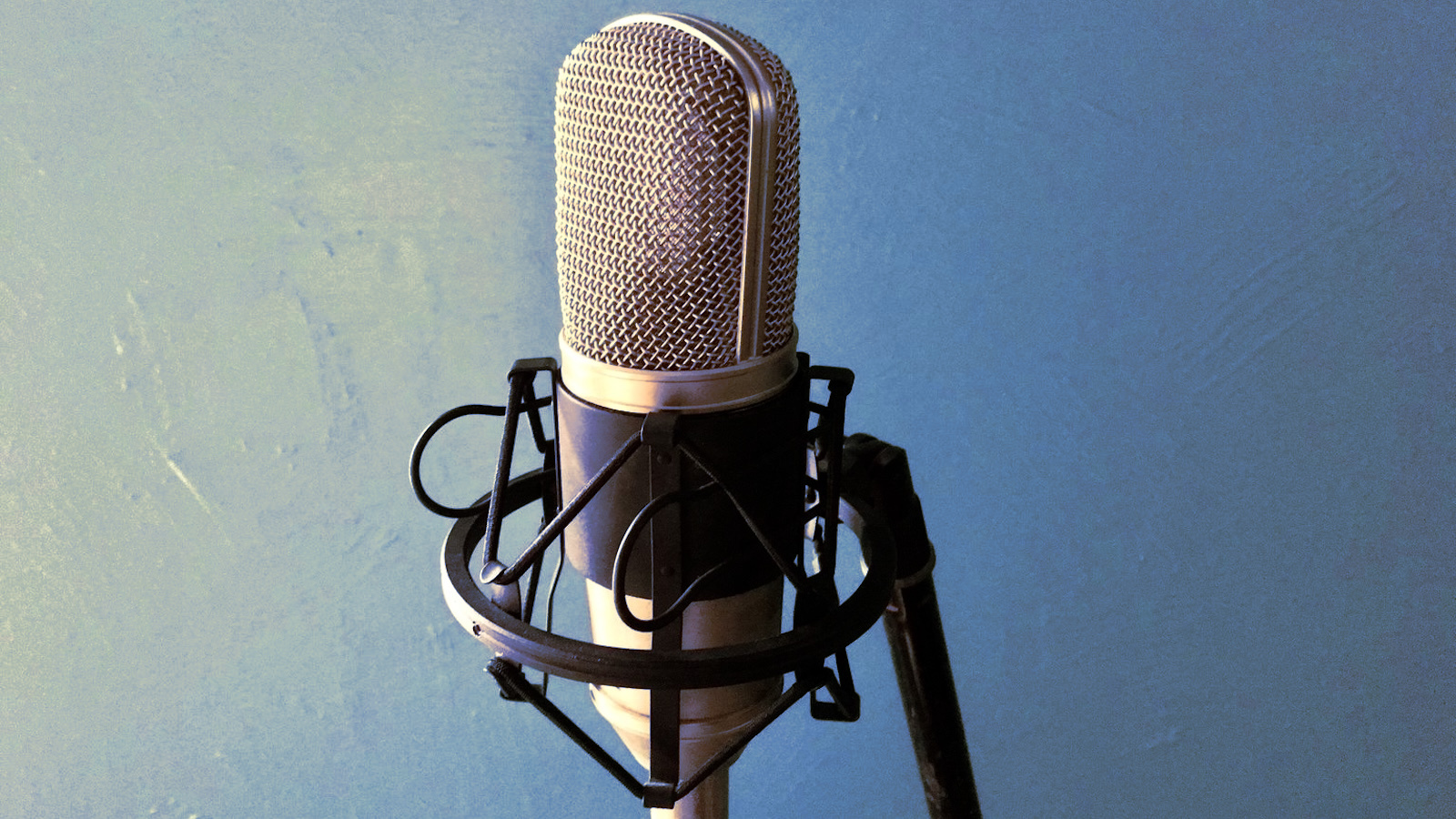
Sound as Medium — An Audio Creative's Journal: Lessons on Audiobooks, Podcasting, and Music Production
I've spent years working across audiobook narration, audio content creation, and music production — not as a hobbyist, but as someone who has built a body of work in each. I've narrated and produced a catalog of more than twenty audiobooks, hosted The Episodic on and off since the before times (using it most recently to explore writing, publishing, and filmmaking), and recorded original music across multiple genres.
What I've learned over years of making independent creator audio is this: audiobook narration, podcasting, and music production are not separate crafts that happen to share a microphone. They share an underlying alchemy that serves to turn auditory experiences into documents, and working seriously across all three has made me measurably better at each one, to reveal the interconnectedness of these art forms. Navigating multiple creative disciplines is a unique load but can resonate with flexible audiences. This article is going to illustrate how these outlets have more in common than what divides them.
Audiobooks: Narrating Your Own Work
I made the decision early to produce every self-narrated audiobook in my catalog myself, rather than license the manuscripts to a voice actor or hand off production to a studio. That choice was made intentionally — to possess the levers to manufacture and produce at the rate that makes sense for me. It came from a conviction that the author-narrator relationship is unlike any other in audio. Self-narrated audiobook production offers a unique blend of creative control and cost-effectiveness, making it an attractive option for independent authors.
By narrating your own work, you not only save on the costs associated with hiring professional voice talent but also bring a depth to your performance that is hard to replicate. When you've lived inside a piece of writing, that familiarity informs the performance at a fundamental level that only great narrators can replicate. Unifying the roles of author and narrator enhances the listening experience for readers, making them feel more connected to the story itself. Across my catalog — spanning fiction, nonfiction, and poetry — that goal for the material has shaped every recording I've made. Through this process, I've found that narrating your own audiobooks can be both rewarding and challenging. It enables you to step into the shoes of an actor while requiring you to keep a keen ear for detail regarding the audio production itself as an audio engineer aswell unless you are working with professionals. This dual role allows for a more nuanced performance that is a platform for connecting with the audience, in addition to entertaining, educating, and inspiring listeners.
The practical reality of the audiobook recording process is considerably less romantic than the performance side. My workflow runs through the editing of the manuscript to a structured read-and-record session, with editing and mastering to follow. The learning curve was perhaps less steep for me when I started after years of performing and recording music; however, in my earlier audiobook sessions, I was spending an exorbitant amount of time editing for every finished minute of audio. That ratio has tightened significantly with experience, which is itself a lesson about craft. Room treatment, mic positioning, and consistent session discipline while also being mindful of how each sentence sounds while recording are vital, but nothing will increase your productivity like getting skilled at working the DAW. It is also valuable to give your work the space to breathe and for unexpected but pleasurable ideas to present themselves.
Independent audiobook production gives you control over the entire chain, but it can also mean building your own distribution infrastructure. I use Findaway Voices and ACX to place my titles across the major retail and streaming platforms — Audible, Apple Books, Google Play, Spotify, Barnes & Noble, Kobo — often without exclusive lock-in. These platforms not only streamline the distribution process but also ensure that my work reaches a broader audience interested in listening due to their built-in user bases. You can find examples of the finished work in my catalog, such as Chicago 1893 on Amazon, and The Fall of Tartaria which are good starting points for the range of material I cover.
Podcasting: Building a Conversation in Public
As I've been producing podcasts on publishing, writing, and filmmaking interviews consistently for three years now (with new episodes released every Monday and ocassional Thursdays), I've come to appreciate the predictable rhythm of podcast production. Podcast production entered my practice differently from audiobooks and music. It requires a blend of preparation, spontaneity, and collaboration – all performative ingredients that make it feel more like jamming in the garage than audiobooks. Which is probably why so many podcasters convert their garage into a podcasting studio! The Episodic is a weekly show I've been producing on and off for a long time, but has recently focused on conversations with writers, publishers, and filmmakers in the last few years. It is available on Apple Podcasts, Spotify, iHeart, Pandora, Audible, and YouTube.
My primary workflow is centered around recording interviews during the week when guests are available, followed by editing as the schedule requires and publishing them every Monday morning. This routine has allowed me to develop a sense of repetition in the software – keeping skills I need sharp for the less frequent audiobook and music production. What isn't obvious from the outside is how much audio storytelling is happening inside what looks like a simple conversation. Interview-based podcasting is still narrative work — you're making structural decisions through question sequencing, choosing which moments to preserve and which to cut, and shaping a coherent arc across the interview. Podcast production at this level is a long game, and the craft of it reveals itself slowly with other people's voices shaping the output alongside mine. More than any other audio format I work in, podcasting is fundamentally conversational — it is unscripted, collaborative, and dependent on chemistry you can't fully engineer in advance.
Creating the podcasting platform has positively impacted my ability to network in my broader creative endeavors. One key lesson I've learned about audio storytelling (and podcasting specifically) is how crucial it is to shape the narrative through question selection, editing, and overall tone. Podcasting has helped me build a dedicated audience that's interested in exploring topics related to publishing, writing, and filmmaking, as well as enhanced cross-promotion with other projects. While the growth hasn't been overnight (and sometimes feels like it's happening slowly), I'm proud of the current catalog of episodes and guests.
The honest account of podcasting's impact on my broader creative work is this: growth has been gradual, with a noticeable uptick in audience more recently. What it has consistently delivered — regardless of download numbers — is meaningful professional relationships. Guests become collaborators, listeners become readers, and the show has become a genuine point of cross-promotion for my audiobook catalog and other projects. It is the most publicly visible part of my creative practice, and it earns its place on that basis.
Music: Composing for Your Own Projects
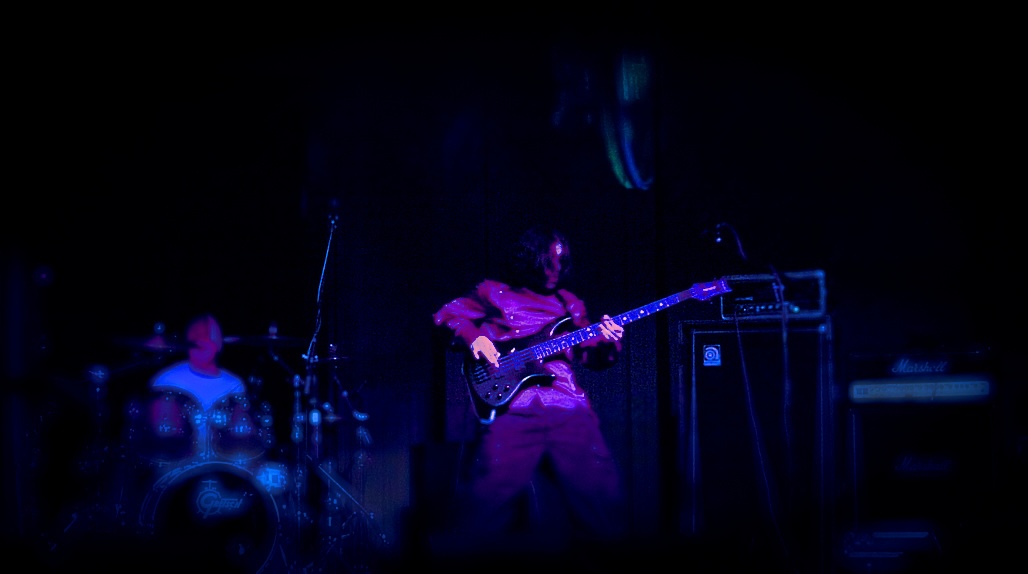
I spent over a decade seriously dedicated to music; giving lessons, making records, and touring. While I’m not pursuing music in the same capacity that I have in the past, I still explore it from time to time for my film projects as well as for audiobook projects when I am creating audioplays that have atmospheric space in the recording for music.
Music composition for film allows a musician and filmmaker to explore their emotional messaging in ways that are impossible for creatives working in a single modality. The process also results in something neither licensing nor outsourcing can: total thematic coherence between the sound and the vision, because both are coming from the same mind. There are a few notable directors who have also composed for their films, such as John Carpenter and Robert Rodriguez. The National Parks series and the 1893 Chicago’s Columbian Exposition soundtrack on Bandcamp showcase how I've applied this approach to documentary work. It was a practical necessity before it became a creative identity. When I began developing my own documentary and narrative projects, the question of music was immediate — and hiring a composer introduced compromises I wasn't willing to accept.
Your Compositional Process
Original soundtrack production involves a blend of creativity and technical skill. I primarily use GarageBand as my digital audio workstation (DAW) these days because it is a clean and intuitive interface that allows me to move in and out of the software quickly while attaching modular hardware peripherals like an interface or keyboard rapidly, whether I am doing a vocal session or fumbling through new music ideas.
- The Fall of Tartaria: used a precomposed track for time but I also came up with a simple 3 instrument ensemble to create additional depth in the score through the heart of the film during dialog, embossing the tension and mystery.
- Anunnaki: Origin of Sumeria: this short has a more thoroughly fleshed out score than The Fall of Tartaria and followed a more traditional development course, meaning I jammed on some ideas while watching the film through a few times then went back and selected bits that sounded like they had potential and then began constructing orchestration and segments around those moments. This allows me to work nonlinearly and also to let the music be flexible while the film is still going through constant revisions, so I don’t lock a musically intense moment to a reading on the timecode for an instance on screen that is going to shift.
- Chicago 1893: soundtrack is a compilation, additional contributors, an original musical theme, and a John Philip Sousa march that evokes the sonic aesthetic of the late 19th century when music was consumed live, prior to widespread electrification
- Exploring Our National Parks: musical theme, intended to sound majestic and epic like a great reveal; 3 EPs, written in very different approaches.
I think mixing is really important, though admittedly I am not the most skilled technical mixer or engineer. For me, it is about trusting my ears and trying to find a way to seat all the instruments; however, once you are mixing an entire film, it becomes important to find room for dialog or voiceover, environmental noise, sound effects or foley, and anything else in the sonic spectrum. Finding “room” for elements becomes easier as you distribute them in stereo. One challenge I want to undertake is attempting to create a 5.1 mix, which requires not only a quadrophonic mix but also a center-front channel as well as a split of bass frequencies going to a subwoofer. Wish me luck!
The soundstracks I've produced for the Exploring Our National Parks series — available on Bandcamp — and the Chicago 1893 soundtrack are direct expressions of the same creative sensibility that shaped the visual and written work. You hear the project's interior logic in the music because the music was built from inside the same process.
What Audio Has Taught Me
Working across these three disciplines has given me a perspective on audio content creation that I don't think is common, though not out of reach. You will have to do any two of these three, seriously and over time, before the connections become apparent. Narrating audiobooks trains a particular kind of sustained attention to language: to rhythm, weight, and the way a sentence lands as a result of inflection. That attention transfers directly to podcast hosting, where the instinct to shape a sentence in real time — to know when to hold silence and when to push — comes from the same muscle (Though I think predominantly podcast editing enables you to work quickly and identify very obvious issues or waveforms and visual representations of the audio signal). Music as a utility skill in the context of media production has been helpful to unify and customize experiences between formats like audiobooks, film, albums, and promotional materials.
This vertical integration of roles is not merely a creative choice; it's also a testament to the independence and flexibility offered by audio content creation. By wearing multiple hats as narrator, host, and composer, I've gained unparalleled control over the final product – freedom that allows me to experiment with innovative formats, collaborate when it makes sense, and push the boundaries of what I was capable of within each discipline.
My body of work is still growing. For the Love of God is my next audiobook, currently securing distribution and scheduled for release in 2026. New episodes of The Episodic continue to roll out weekly, with guests booked out for the next few months. And the Exploring Our National Parks documentary for Volume 3 is currently in the approval process for broader distribution, with the companion EP comprised of songs from the instrumental soundtrack.
Independent creator audio is sometimes framed as a compromise — what you do when you can't afford specialists. That's not what it is. Being a narrator, the host, and the composer simultaneously is a platform, the conduit for sound as a medium of exchange.